
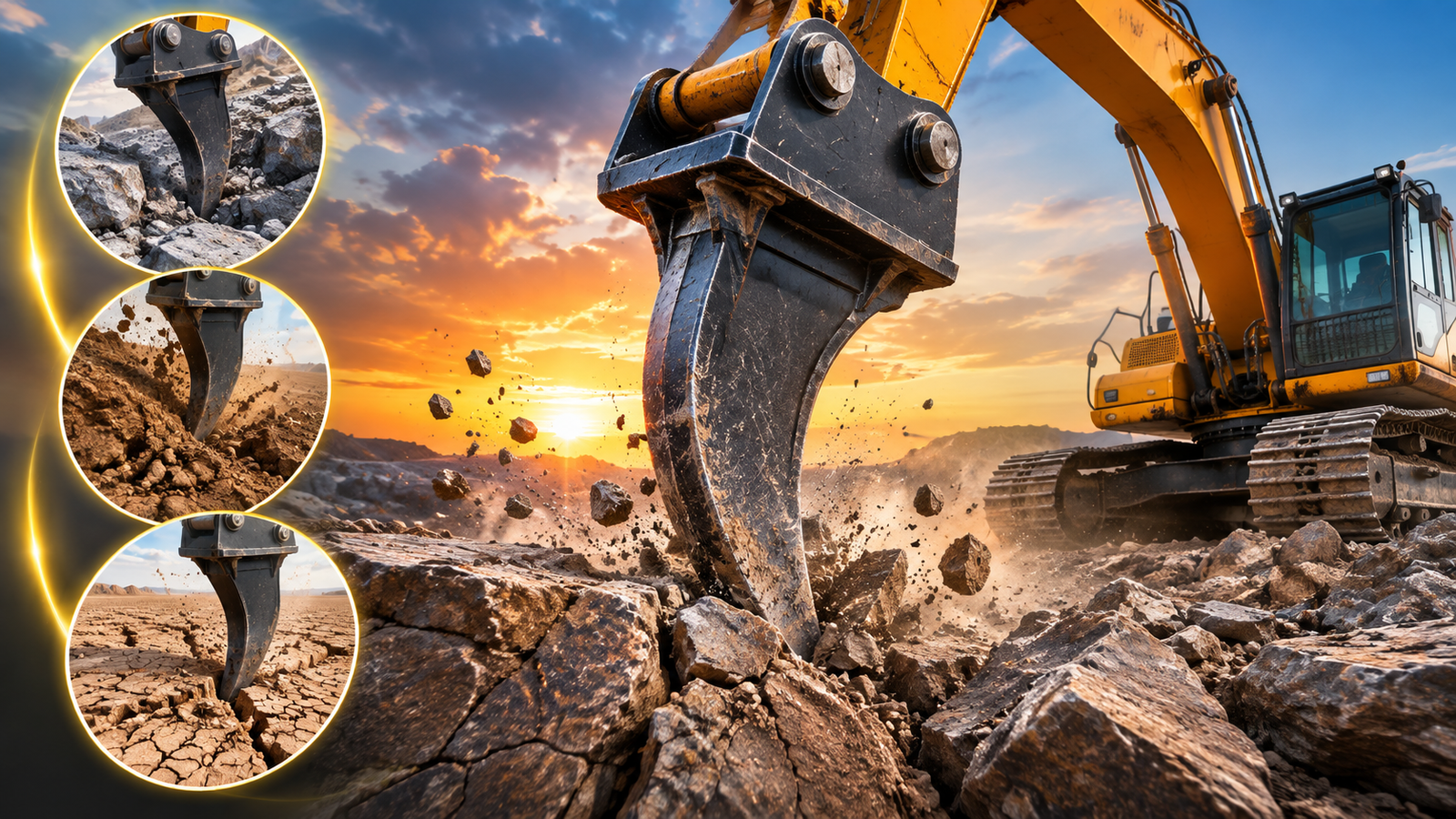
Excavator Rippers: Breaking Ground on Tough Terrain
Have you ever rolled up to a site preparation job only to hit a layer of earth so hard it feels like a solid sheet of concrete? Whether you are dealing with deeply compacted clay, thick winter frost, or nasty layers of weathered rock, trying to muscle through it with a standard bucket is a recipe for disaster. That is exactly where excavator rippers step up to the plate.
An excavator ripper is essentially a massive, heavy-duty steel claw built specifically to tear through the kinds of unforgiving landscapes that stop standard machinery dead in its tracks. Instead of spreading your machine’s hydraulic pushing power across a wide bucket edge—which usually just leads to scraping the surface and bouncing the cab around—a ripper focuses every ounce of that breakout force into one razor-sharp point.
It rips the earth open from the inside out, loosening the ground so you can easily scoop it up later. At AmericanExcavator.org, we know that working in brutal conditions takes specialized tools, and if you want to keep your projects moving without destroying your primary digging equipment, getting familiar with this attachment is an absolute must.
- They take the full hydraulic force of your machine and pinpoint it directly into the ground for massive penetration.
- They act as a defensive shield for your expensive standard buckets, saving the teeth and cutting edges from premature ruin.
- They give you a much faster, cheaper, and lower-maintenance option compared to running a noisy hydraulic breaker all day.
The Raw Mechanics Behind the Muscle
To really get why excavator rippers are so effective, you have to look at the brute-force engineering behind them. Forged from thick, high-yield steel, this attachment looks like a giant, curved tooth that pins directly onto your excavator’s arm. That specific curved shape isn’t just there to look aggressive; it is all about leverage.
When you drag a ripper through the dirt, the curve allows the shank to naturally hook under dense materials like boulder clusters, ancient tree roots, or thick asphalt slabs, prying them up with ease.
Because there is no wide bucket to create drag, the ripper shank acts like a hot knife through butter, fracturing the soil’s structural bonds without fighting against the loose dirt. You are basically pre-conditioning the site. You go in, rip the ground into manageable, broken pieces, and then swap back to your bucket to effortlessly load the loose material into your dump trucks. It completely changes the pace of a tough earthmoving job.
- The heavily curved shank provides massive prying power, letting you hook and lift stubborn underground obstacles.
- They are built out of heavily reinforced, wear-resistant steel to survive the daily grind in highly abrasive rocky soil.
- The teeth on the tip are completely replaceable, meaning you can easily swap them out in the field to keep the tool cutting sharply.
Why Smart Operators Ditch the Bucket for a Ripper
We see it all the time: an operator tries to force a standard digging bucket through solid shale, and the result is usually snapped bucket teeth, smoking hydraulic fluid, and a lot of wasted time.
Smart contractors know that swapping to an excavator ripper attachment early on is the best way to bridge the gap between a standard bucket and a heavy-duty hydraulic hammer. A standard bucket is built to move volume, not to break solid bonds.
On the flip side, a hydraulic breaker is fantastic for smashing concrete slabs, but it is way too slow, loud, and jarring for general soil conditioning. Excavator rippers hit that perfect middle ground.
They tear up compacted ground incredibly fast, they operate without the deafening noise of a hammer, and they leave the dirt perfectly prepped for your bucket work. By making the switch, you avoid beating your machine to death while getting the trench dug twice as fast.
- Rippers completely eliminate that violent “bouncing” that shakes the cab when a flat bucket hits impenetrable dirt.
- They save contractors thousands of dollars by preventing stress fractures on excavator arms and bucket hinges.
- They run much quieter and smoother than hydraulic hammers, making them a favorite for jobs in tight residential neighborhoods.
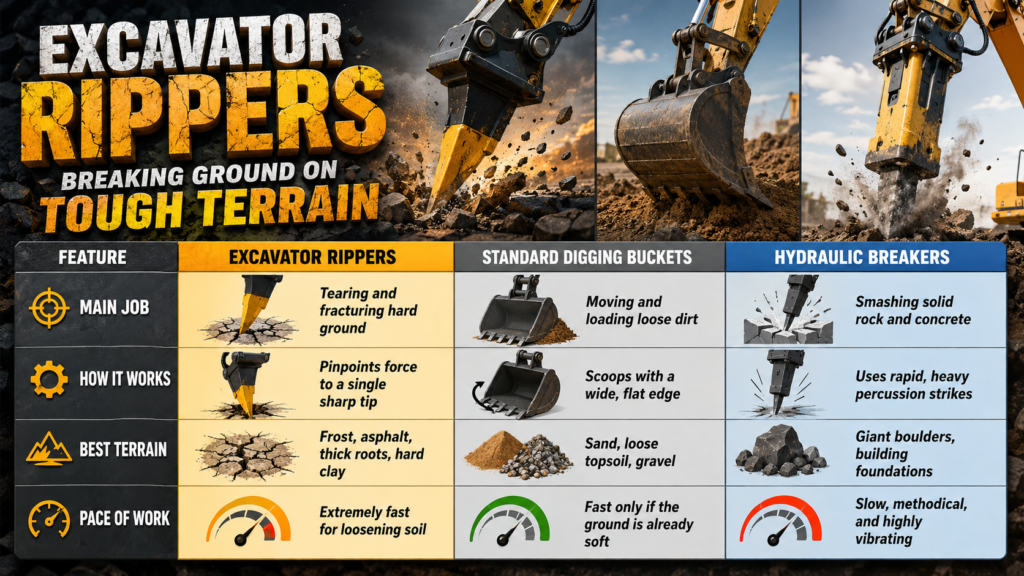
Table: Excavator Rippers: Breaking Ground on Tough Terrain
| Feature | Excavator Rippers | Standard Digging Buckets | Hydraulic Breakers |
| Main Job | Tearing and fracturing hard ground | Moving and loading loose dirt | Smashing solid rock and concrete |
| How It Works | Pinpoints force to a single sharp tip | Scoops with a wide, flat edge | Uses rapid, heavy percussion strikes |
| Best Terrain | Frost, asphalt, thick roots, hard clay | Sand, loose topsoil, gravel | Giant boulders, building foundations |
| Pace of Work | Extremely fast for loosening soil | Fast only if the ground is already soft | Slow, methodical, and highly vibrating |
Where Excavator Rippers Really Shine
The beauty of excavator rippers is how versatile they actually are across totally different industries. One of the biggest lifesavers is using them during the dead of winter. When the temperature plummets and the ground freezes solid, standard buckets just slide right off the frost line.
A ripper slices right through that frozen crust, letting construction crews keep working and earning money year-round instead of waiting for a spring thaw. Out in the woods, land clearing crews love them for stump removal.
That curved shank can reach deep into the dirt, slice right through thick taproots, and pop massive stumps out of the ground without grabbing a ton of excess dirt. Even in city limits, road crews use them constantly to tear up old driveways, rip through abandoned asphalt parking lots, and quickly open up utility trenches. It is far more than just a dirt tool.
- They easily punch through deep winter frost lines, keeping your construction schedule totally on track during the colder months.
- They are the ultimate tool for commercial land clearing, easily severing roots and popping out massive tree stumps.
- They make quick work of municipal demolition by cleanly ripping up layers of asphalt and heavily compacted road gravel.
Saving Your Machine (And Your Profit Margins)
At the end of the day, using an excavator ripper isn’t just about making the digging easier; it is about protecting your fleet and putting more money in your pocket. When you force an excavator to struggle against hard ground with the wrong tool, the engine has to run at maximum RPMs, sucking down expensive diesel fuel while putting dangerous lateral stress on the boom and stick.
By tearing the ground up with a ripper first, you take an immense amount of strain off your machine. The ripper does the exhausting work of breaking the earth open. When you finally switch to scooping, your machine hardly has to work at all.
Because the dirt is totally loose, every single scoop is a full, heaped bucket. You spend less time scraping, less money on fuel, and you get the job done in half the time. It is a simple step that heavily impacts your bottom line.
- Ripping the ground first significantly drops engine load, which immediately cuts down your daily diesel fuel costs.
- By stopping the bucket from violently slamming into rock, you save your hydraulic pins and bushings from early failure.
- Getting full bucket loads on every single pass slashes your total cycle times and dramatically reduces your labor hours.
No-Nonsense Maintenance Tips
If you want your excavator rippers to keep breaking ground on tough terrain season after season, you cannot ignore basic maintenance. Yes, they are basically giant blocks of reinforced steel, but the friction of tearing through granite and frozen clay generates extreme heat and wear.
The most important thing you can do is keep an eye on that replaceable tooth at the tip. If you let that tooth get dull or rounded off, the ripper loses its cutting power. When it can’t cut cleanly, it starts dragging, which forces your excavator to burn more fuel to pull it through the dirt.
Wash the heavy mud off after your shift to stop rust, keep those mounting pins greased up so they don’t bind, and do a quick visual check for hairline cracks near the welds. A few minutes of preventative care will easily double the lifespan of your attachment.
- Always check the replaceable tip before starting your shift and swap it out the second it looks blunt or heavily chipped.
- Wash off the corrosive mud and wet clay at the end of the day to protect the steel from rusting out over time.
- Hit all the mounting pins with a grease gun regularly to stop metal-on-metal friction from ruining the joints.
FAQs – Excavator Rippers: Breaking Ground on Tough Terrain
What is an excavator ripper attachment?
An excavator ripper is a heavy, single-tooth steel claw that mounts to your machine’s arm. It is designed specifically to penetrate and tear through ultra-hard materials like frost, rocky soil, and dense clay. Instead of a bucket that spreads force out, a ripper focuses all your machine’s power into one point to fracture ground that is otherwise impossible to dig.
When should I use an excavator ripper instead of a hydraulic breaker?
Reach for an excavator ripper when you need to loosen up hard, compacted soil, frozen dirt, or weathered rock for easier digging. It is much faster and quieter for soil conditioning. Save the hydraulic breaker for the jobs that actually require smashing solid, unyielding materials like thick concrete foundations or giant, solid boulders.
Can an excavator ripper remove tree stumps?
Yes, it is actually one of the best tools for the job. The curved shape of the ripper lets you reach deep down and slice right through the thick root system surrounding the stump. Once the roots are severed, you just hook the ripper under the base of the stump and easily pry it right out of the ground.
How do I maintain my excavator ripper?
The biggest maintenance task is simply watching the replaceable tooth at the tip; if it gets dull, swap it out immediately so you don’t lose penetration power. Beyond that, just make sure to clean the mud off after work, grease the connection pins regularly, and keep an eye out for any small cracks forming along the steel shank.
Does using an excavator ripper save fuel?
It absolutely does. If you try to scrape hard ground with a standard bucket, your engine has to run redline just to move an inch, which burns a ton of diesel. By using a ripper to break the ground up first, your bucket can just easily scoop the loose dirt later, dropping your engine strain and saving you a lot of fuel.
Do I need special training to operate an excavator ripper?
If you already know how to operate an excavator safely, you don’t need a special license just to use a ripper attachment. However, you definitely need to understand your machine’s weight limits and center of gravity. Pulling too hard on a stubborn rock with a ripper can easily tilt or destabilize the machine if you aren’t careful.
Can an excavator ripper cut through concrete?
An excavator ripper can easily pry up and break apart old asphalt, thin sidewalks, or basic residential driveways. However, if you are dealing with thick, structural concrete that is heavily reinforced with rebar, the ripper isn’t the right tool. For heavy-duty concrete demolition, you need a hydraulic hammer or a concrete pulverizer.

A trailer running at its weight limit continuously leads to accelerated tire wear and premature brake failure. Always choose a trailer rated at least 20% above your loaded machine weight.
Always calculate your TYPHON's wet weight — with fuel, hydraulic fluid, and a full tank — before purchasing a trailer. Dry weight figures from spec sheets are commonly 8–12% lower than the real transport load.
"The right trailer is not an accessory — it is the foundation of a safe, legal, and efficient job site operation for any TYPHON mini excavator owner."