

Myth Busted: Why “Newer” Isn’t Always Better and How to Spot the Smartest Mini Excavator for Sale
Walk into any heavy machinery dealership today and you will see clean polished floors, chrome accents, and salespeople eager to walk you through twelve-inch digital touchscreens, satellite telematics, and automated joystick dampening. Thus, opting for the best quality machine from the mini excavator for sale option will increases its efficiency and durability.
The Dealership Mirage: Why Shiny Paint Won’t Move Frozen Dirt
They make it sound like you cannot dig a straight trench or grade a building pad without five different microprocessors monitoring your hydraulic pressure. But walk off that pristine showroom floor and onto a muddy, wind-whipped cut in late November. The weather is dropping fast, your dump trucks are idling in line burning diesel, and suddenly a factory sensor throws a code because moisture got into a harness connector.
Just like that, your $350,000 rig drops into limp mode. You cannot override it, your lead mechanic cannot bypass it with a wrench, and the dealer tells you the earliest a certified field tech can swing by with their proprietary laptop is Tuesday morning. That is the moment the whole “newer is always better” sales pitch falls apart. On real job sites, iron moves dirt—not software.
When deadlines loom and penalties tick away by the hour, looking for a reliable, older mechanical mini excavator for sale makes cold, hard business sense. These rigs were engineered to run on high-pressure hydraulics and pure mechanical leverage, not fragile circuits that panic the second vibration and grit get under the cab.
- Zero unearned limp modes: Older mechanical platforms do not shut down operations over an errant exhaust gas temperature reading or a glitching telematics antenna.
- Repairs happen on your watch: You stay in total control of your downtime instead of waiting around on a dealership technician with a proprietary diagnostic cable.
- Built around heavy steel: Older iron carries counterweights and structural frames forged thick enough to withstand decades of operator error and unforgiving rock.
The True Cost of Microchip-Heavy Earthmovers
Modern equipment manufacturers are not designing excavators exclusively for the guy wearing mud-caked boots; they are designing them for corporate fleet managers looking at fleet telemetry dashboards from an air-conditioned office.
The trade-off is brutal. Every time a manufacturer adds an automated valve body, an electronic displacement controller, or an integrated GPS sensor, they add another potential failure point directly into the most violent working environment on earth.
Think about the pounding a bucket takes when busting through chert, limestone, or frozen clay. Shockwaves travel straight up the boom, through the stick cylinder, and into the house. Heavy copper wiring, micro-relays, and delicate circuit boards hate shock, vibration, and temperature swings.
So while the newer rig might sip three percent less fuel under ideal conditions, that minor saving vanishes the first afternoon the machine sits dead in the cut while payroll continues to run.
When you scour the market for a mini excavator for sale, stripping away those unneeded layers of electronic fragility should be a top priority. A classic, well-maintained machine leaves you with beefy displacement pumps, robust pilot controls, and an engine you can diagnose with a flashlight and a pressure gauge.
- Electrical gremlins run rampant: Field vibration and moisture constantly degrade complex wiring harnesses, causing phantom errors that take days to trace.
- Depreciation guts your balance sheet: That brand-new machine loses thirty percent of its equity the very first season it spends chipping rock.
- Loss of manual override: Modern drive-by-wire controls take power out of the operator’s hands, preventing skilled hands from coaxing a wounded machine out of the cut.
Structural Iron: Finding a Proven Mini Excavator for Sale
There is an old saying across the scrap yards and quarry pits: they simply do not pour iron like they used to. Decades ago, domestic heavy equipment engineering operated under a different philosophy. Steel was cheap, structural safety margins were massive, and engineers designed booms and car-bodies to take decades of brutal abuse without cracking at the seams.
If you put a micrometer on the boom plating of a classic excavator and compare it to a modern, weight-optimized import, the difference in metal thickness is obvious. That extra bulk is not dead weight; it is the ballast and strength that keeps the house planted when you are peeling out massive boulders or swinging heavy demolition shears.
These structural frames do not twist or fatigue anywhere near as easily when working on side-slopes or rough terrain. When you need to keep that structural advantage alive for another ten thousand hours, finding the right excavator for sale is just the first step. The next is maintaining it properly.
Sticking with genuine American excavator parts, OEM-spec pins, bushings, and seal kits gives you an indestructible rig that will easily outlive two generations of disposable modern machines.
- Over-engineered boom plates: Heavy-gauge steel construction prevents flex, micro-fractures, and metal fatigue during extreme prying applications.
- Grounded stability: Added base weight keeps the tracks anchored into the ground, translating engine torque directly into raw bucket breakout force.
- Rebuildable iron: Heavy-duty machines are designed with serviceable bores and rebuildable hydraulic components rather than non-serviceable sealed units.
Depreciation vs. Dependability: Crunching the Real Numbers
Let’s talk money, because pride does not pay the fuel bill or make equipment payments during the slow winter months. Taking on a staggering six-figure equipment note on a brand-new digger puts constant pressure on your bid pricing. You are forced to bid high to cover debt service, or bid low and pray nothing breaks.
Meanwhile, the second that new iron rolls off the lowboy onto your site, value evaporates into thin air. By contrast, picking up a clean, field-tested excavator for sale means someone else ate the brutal initial depreciation curve years ago. The machine’s market value has stabilized.
If you purchase it for seventy grand, run it hard for three seasons, and keep up with greasing, fluid testing, and packing your cylinders, you can usually sell it for almost what you paid for it. More importantly, when common excavator problems crop up, you are not buying $4,000 electronic control modules; you are rebuilding standard spool valves or replacing universal hydraulic hoses that your local shop can crimp in fifteen minutes.
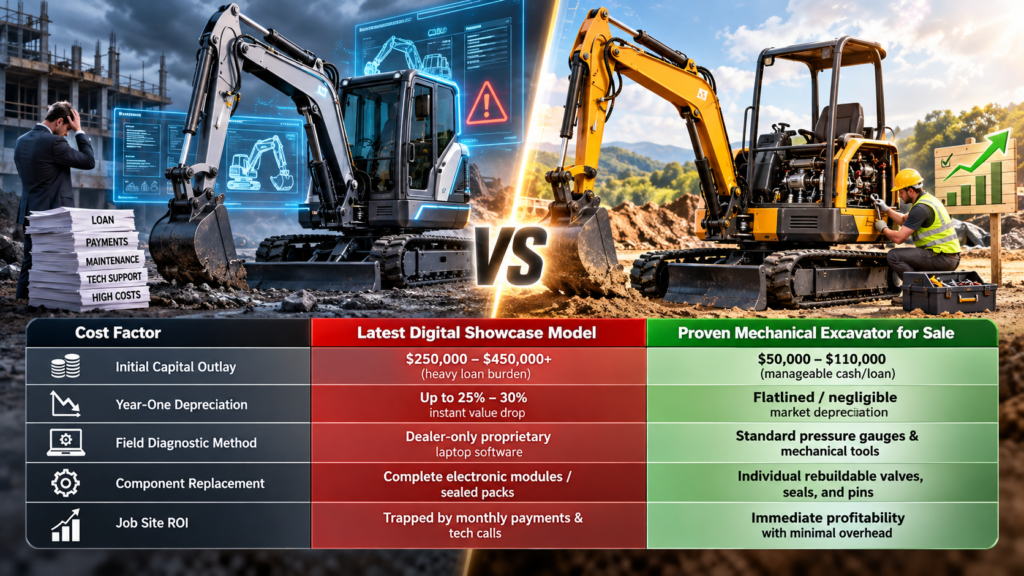
Table: The Dealership Mirage: Mini Excavator for Sale
| Cost Factor | Latest Digital Showcase Model | Proven Mechanical Excavator for Sale |
| Initial Capital Outlay | $250,000 – $450,000+ (heavy loan burden) | $50,000 – $110,000 (manageable cash/loan) |
| Year-One Depreciation | Up to 25% – 30% instant value drop | Flatlined / negligible market depreciation |
| Field Diagnostic Method | Dealer-only proprietary laptop software | Standard pressure gauges & mechanical tools |
| Component Replacement | Complete electronic modules / sealed packs | Individual rebuildable valves, seals, and pins |
| Job Site ROI | Trapped by monthly payments & tech calls | Immediate profitability with minimal overhead |
- Cash flow protection: Lower overhead frees up capital for payroll, bonding capacity, and bidding on larger, more lucrative civil jobs.
- Predictable operating costs: Fluid changes, filter kits, and bushing replacements are easy to budget without worrying about mystery dealer service bills.
- Rock-solid resale value: Reliable mechanical iron retains an active, eager buyer base of independent contractors who want simple machines.
The Right to Repair: Keeping Wrench Time in Your Own Hands
Nothing kills job site morale faster than looking at an idle machine while your own mechanics stand around with their hands in their pockets because the engine management system has locked them out.
The push toward computerized heavy equipment is largely designed to build high-margin revenue streams for dealership service networks. When a machine cannot regenerate its exhaust system or calibrate a swing brake without a secure factory login, your operations are effectively held hostage.
With a mechanically sound mini excavator for sale, your shop crew regains control of the fleet. The engine bays are actually spacious enough to fit human hands, the hydraulic circuits follow clear physical schematics, and common excavator problems can be addressed right on the timber mats before lunch.
When you run reliable construction machinery that local excavation contractors and independent mechanics already know inside and out, you eliminate the single biggest bottleneck in construction: reliance on outsourced labor. A bucket pin, a cracked hardline, or a worn track adjuster should never be a reason to pull a machine out of the dirt for two weeks.
- Direct mechanical access: Plenty of clearance in the house allows mechanics to replace pumps, starter motors, and alternators without pulling half the cab apart.
- Universal troubleshooting: Any skilled heavy-equipment wrench can isolate hydraulic pressure drops without needing software training.
- Independent maintenance schedules: Service your iron based on real site conditions, oil sample analysis, and actual working hours rather than arbitrary digital prompts.
Attachments, Balance, and Safe Working Realities
The real measure of any earthmover is how it acts as a tool carrier. A bare bucket is fine for bulk dirt, but profitability comes from versatility—running thumbs, plate compactors, hammers, and rippers.
Modern electronically controlled excavators often struggle here; their sensitive hydraulic computers detect slight pressure spikes from a hydraulic breaker or ripper and throttle down flow to protect fragile relief valves. An older, battle-tested excavator for sale, by contrast, gives you direct, uninterrupted hydraulic muscle.
Bolt on a set of heavy-duty excavator rippers and you can tear through caliche, shale, and asphalt without the machine second-guessing the operator’s inputs. However, running heavy demolition tools requires paying close attention to excavator weight limits.
Because older domestic rigs were built with plenty of heavy counterweight steel right behind the engine, they offer an inherently more stable footprint. When you are swinging a two-ton concrete pulverizer over the side of the tracks, that extra metal prevents the gut-wrenching track lift that spooks green operators and damages undercarriages.
- Full auxiliary flow: Hydraulic circuits provide continuous, unrestricted gallon-per-minute flow directly to demanding tools like augers and rock hammers.
- Uncompromising balance: Heavier structural counterweights minimize rocking and undercarriage stress when lifting heavy pipe or precast concrete boxes.
- Clear structural limits: Direct physical feedback through the boom gives seasoned operators an intuitive feel for lifting thresholds long before tipping occurs.
Frequently Asked Questions – Mini Excavator for Sale
Why should I choose an older mechanical model when looking for a mini excavator for sale?
An older, proven excavator bypasses delicate sensors, complex emissions systems, and proprietary software lockouts common on newer machines, providing better mechanical reliability, straightforward field repairs, and a far lower purchase price.
Are parts still readily available if I buy a classic mini excavator for sale?
Yes. Because these machines were manufactured in massive numbers, genuine American excavator parts, rebuilt components, and seal kits are widely stocked across domestic warehouse networks, making maintenance highly predictable.
Can an older excavator safely run modern attachments?
Yes. As long as your hydraulic flow and pressure match attachment specs, a proven mechanical rig makes an exceptional tool carrier for hydraulic thumbs, compactors, and heavy-duty excavator rippers without requiring complex electronic calibration.
How do newer and older excavators compare on job site downtime?
Newer excavators most frequently break down due to sensor failures, wiring harness shorts, and emission control errors that require dealership visits. Older platforms experience standard mechanical wear that site mechanics can easily address.
What should I check first when evaluating a used excavator for sale?
Always check the hydraulic pumps for consistent pressure, inspect the boom and stick for micro-fractures or poor weld repairs, and ensure the undercarriage (sprockets, rollers, and track pads) has adequate life remaining.
What is the best way to monitor excavator weight limits on older machines?
Refer to the manufacturer’s physical lift charts mounted in the cab or operator manual, factoring in track orientation, working radius, and the weight of your quick-coupler and attachments to keep the machine stable.
Does a used excavator for sale have a worse return on investment than fuel-efficient new rigs?
No. While a new machine might use slightly less fuel per hour, its massive monthly loan payment, sharp depreciation, and expensive dealer diagnostics typically yield a much lower net ROI than a paid-off, dependable mechanical excavator.