
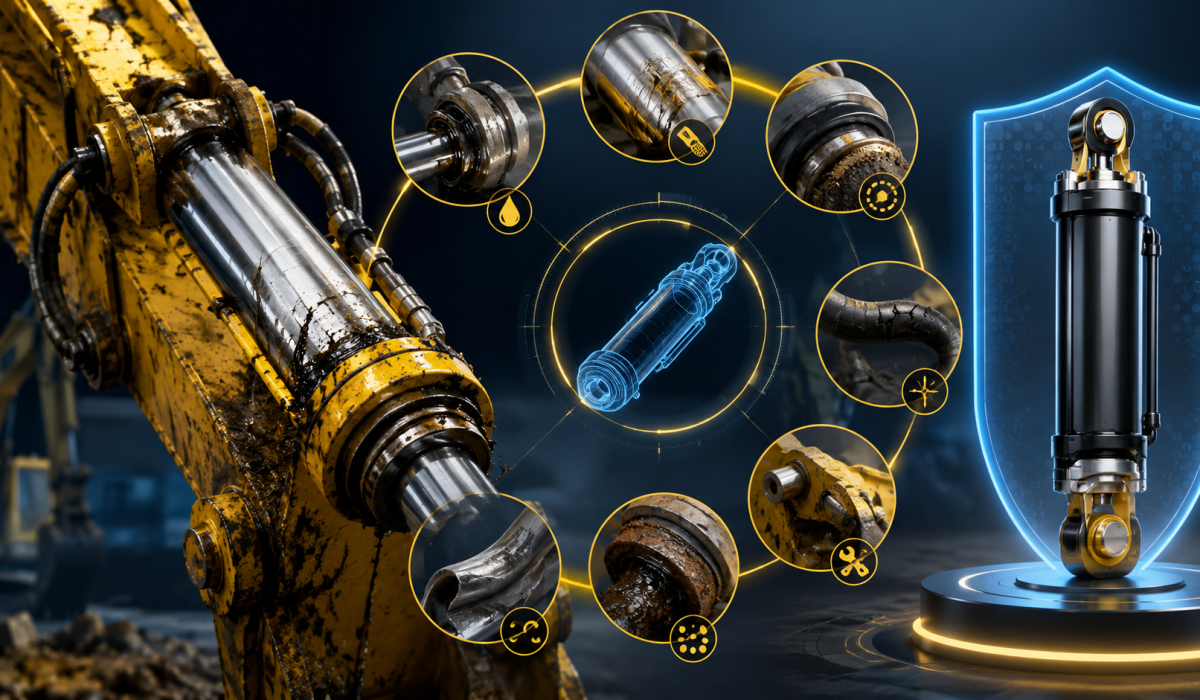
7 Common Hydraulic Arm Cylinder Failures and How to Prevent Them
The backbone of every strong excavator is its rugged hydraulic system, where hydraulic cylinders give the massive digging force, lifting ability and precise control needed for the most demanding construction and mining applications. However, operators, fleet managers and heavy machinery owners experience huge operational downtime and heavy financial losses due to unexpected hydraulic arm cylinder failures.
It is vitally critical for anybody trying to improve their equipment’s life and daily efficiency to understand the underlying mechanical core reasons behind these malfunctions. In a heavy-duty excavator, the moving parts are under so much physical stress that they are especially sensitive to increased wear and tear over time. Knowing the early symptoms of strain and taking strong, proactive preventive actions may eventually save you from catastrophic failures in the midst of a key project site.
Importance of Hydraulic Arm Cylinder
A hydraulic arm cylinder failure may put your whole excavation operation to a standstill, whether you are working with a tiny micro excavator in tight residential areas, or a big full-size earthmoving equipment at a quarry. These maddening breakdowns may be caused by anything from the invisible, creeping harm of tiny fluid pollution to the obvious, instant physical effect of a bent piston rod.
At American Excavator, industry experts keep stressing that settling for poor equipment maintenance methods or outright disregarding the machine’s warning indicators nearly always results in serious production decreases and increased repair expenses. In this exhaustive, deep-dive book, we will extensively investigate the most common mechanical and environmental problems that relentlessly attack the integrity of your heavy gear.
Furthermore, we will formulate practical, proven techniques to avoid these problems, guaranteeing that your excavator stays an immensely dependable tool on the work site for years to come while carefully reducing the chance of hydraulic arm cylinder failures.
7 Common Hydraulic Arm Cylinder Failures:
1. Fluid Contamination: A Devastating Problem
Fluid contamination is the single most aggressive and prominent catalyst for hydraulic arm cylinder failures historically. It accounts for a massive percentage (sometimes as much as 70%) of complete system breakdowns. Foreign abrasive particles like airborne debris, tiny dust, metallic shavings, even ambient dampness, if they manage to get into the closed hydraulic fluid system, immediately change a smoothly working mechanism into a self-destructing nightmare.
These microscopic particles are moving at high velocity through the equipment at tremendous pressure, constantly scratching the delicate interior bore of the cylinder barrel and gouging deep into the protective chrome surface of the piston rods. Also, heavily contaminated hydraulic fluid quickly damages the internal protective seals, completely blocks the necessary fluid ports and severely limits the smooth flow of oil needed to generate maximum hydraulic lifting power.
This contaminated fluid is continually circulated under pressure for long periods of time. It is like liquid sandpaper, rapidly increasing the wear and tear of internal parts and eventually leading to sluggish equipment operation or total system failure. To combat this very common hazard and avoid failures of the hydraulic arm cylinder, operators have to be merciless in ensuring the hydraulic fluid is kept as clean as possible and this is the number one priority when it comes to maintenance.
- Implement Strict Filtration Protocols: Install and frequently replace high-quality, manufacturer-recommended hydraulic fluid filters rigidly in accordance with the equipment’s authorized service intervals to trap abrasive particles.
- Maintain a Clean Working Environment: Anytime you are adding new hydraulic fluid or physically changing excavator attachments, be sure to thoroughly clean the surrounding connection locations to avoid outside dirt from entering the susceptible hydraulic lines.
- Regularly inspect and replace wiper seals: Degraded or faulty wiper seals are generally recognized as a key source of accelerated fluid contamination. Proactively changing them at the first indication of cracking is an effective measure to prevent abrasive air particles from entering the fluid.
2. Seal Leakage The Quiet Killer of Efficiency
Seals are the most mechanically sensitive elements of any hydraulic cylinder assembly and the failure of seals is directly related to a significant and apparent decrease of operating pressure of the machine. These critical seals are often made of relatively soft polyurethane, synthetic rubber or composite materials. Their job is to keep the highly pressured hydraulic fluid contained on the inside and keep external ambient pollutants from entering the clean system.
Unfortunately, their softer material construction makes them very vulnerable to high working heat, erosion from chemical fluids, poor installation by technicians, and abrupt dramatic spikes in pressure. If an internal or exterior seal starts to chemically break down or fall apart, you’ll easily see hydraulic oil weeping profusely around the extending rod or dangerously accumulating on the floor below the gear.
The ongoing leaks make for a dirty and very dangerous environmental work situation and drastically cut the cylinder’s holding capacity, lift speed and overall accuracy. Ignoring seal deterioration is a direct gateway to far more serious hydraulic arm cylinder problems. This leads to a lack of crucial lubrication and a loss of fluid pressure, forcing the hydraulic pump and surrounding components to strain itself dangerously hard.
- Daily whole Visual Inspections: Operators must visually inspect the whole surface of the rod and the cylinder glands on a daily basis to identify any early indicators of oil leaking, abnormal wetness or major dirt build-up that might be indicative of a concealed seal leak.
- Always Use High-Quality Replacement Seals: Always use manufacturer-approved, premium-grade, carefully tested replacement seals, not cheap generic ones that will almost surely quickly deteriorate under the strong operating stresses of a construction site.
- Use Proper Professional Installation Tools: Never try to push new soft seals into place with sharp metal items such as common screwdrivers since the miniscule nicks created during installation will cause instant frustrating leaking at the first pressurization.
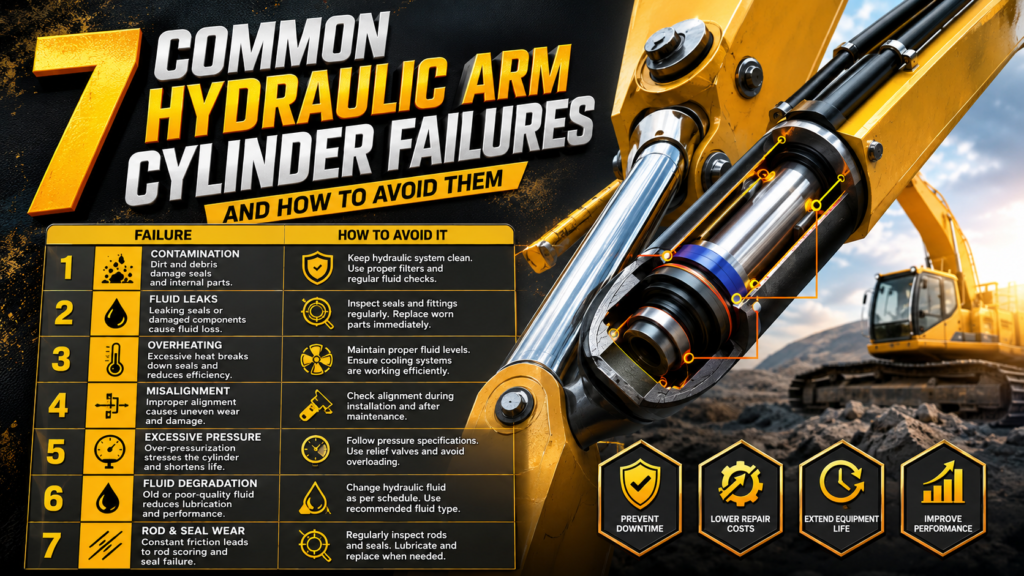
3. Side loading causes uneven wear and tear
Hydraulic cylinders are specially and carefully developed to provide massive linear force, which means they are built to push and pull only in a precisely straight, intended direction. Side loading is a very destructive phenomenon. This occurs when an unintended external force is applied perpendicular to the intended linear alignment.
This disrupts the delicate structural balance of the cylinder violently. These tremendous lateral pressures are typically purposely or inadvertently caused in strenuous excavator operations, when heavy trash is sometimes pushed violently laterally with the side of the bucket or worked in very uneven, steeply sloping terrain.
In other words the wear is dramatically uneven with moderate, continuous side loading. The inflexible piston rod is forcefully pushing against one particular side of the gland, while the internal piston is dragging excessively over the exact opposite side of the barrel wall. This very uneven distribution of mechanical friction will ruin the internal seals early and generate extraordinarily deep, irreparable cylinder bore scoring over time.
In severe, rapid circumstances, excessive side loading may simply bend or violently shatter the thick piston rod, resulting to catastrophic hydraulic arm cylinder failures that instantly risk worker safety and incur large, unforeseen repair expenses.
- Appropriate and Continuous Operator Training: Train all machine operators extensively on the appropriate and safe use of the excavator, especially to prevent lateral sweeping bucket movements or incorrect sideways lifting methods which produce huge unnatural sideways pressure.
- Periodically Inspect and Lubricate Mount Connections: Check all critical mounting points, rod eyes and joint bearings for excessive mechanical slop, lost pins or structural deterioration that can dangerously misalign the cylinder during heavy operation.
- Keep the Heavy Excavator Properly and Stable on the Machine: Whenever physically feasible, always intentionally put the heavy excavator on structurally sound, completely level ground to effectively prevent unusual operating angles and lateral stress on the highly laden arm cylinders.
4. High Temperatures Degrading Component Integrity
The unique day-to-day operating environment is a really significant factor in the long-term health of your heavy gear, with excessive ambient temperatures being a very damaging, silent murderer of complicated hydraulic systems. In situations of very high summer temperatures or in places with insufficient ventilation, the internal hydraulic fluid may quickly oxidize and thicken to hazardous levels, and the strong ambient heat forcefully drives the polyurethane cylinder seals to permanently deform and lose their sealing ability.
Such extreme heat deterioration seriously reduces the inherent capability of the fluid lubricant to appropriately protect vital, moving internal components against severe friction and therefore leads to excessive, irreversible wear. On the other hand, the same seals, when winter comes and becomes frigid, lose their critical flexibility and elasticity dramatically, becoming totally brittle and very likely to fracture instantaneously under high fluid pressure.
And, on top of that, freezing ambient conditions dramatically raise the initial viscosity of the hydraulic oil, voraciously starving the hydraulic pump and generating catastrophic, loud cavitation if the whole system is subjected to a significant lifting load before proper warming up. Aggressively regulating thermal temperature swings is vitally important in the daily battle to avoid expensive hydraulic arm cylinder breakdowns.
- Follow Correct, Patient Warm-Up Procedures: Always patiently let the excavator’s engine and hydraulic system warm up properly and reach the best, safe operating temperature before you jump into any heavy lifting or digging.
- Monitor Fluid Temperatures During Shifts: During very long, demanding shifts, actively and continuously monitor the circulating hydraulic oil to verify that it is safely within the equipment manufacturer’s designated safe operating range using the cabin temperature gauges.
- Use Climate-Appropriate Synthetic Fluids: Proactively change to specialty, high-grade seasonal hydraulic fluids that are scientifically formulated for optimum protective viscosity in either extreme summer heat or bitter winter cold conditions.
5. Bent or Damaged Piston Rods Interrupting Operations
Arguably the most visible and most easily damaged crucial component of the complete hydraulic cylinder assembly is the bright chrome-plated piston rod. It expands and retracts, over and over again, continually, with every single machine movement, steadfastly taking the entire brunt of the excavator’s massive pushing and lifting powers.
A badly bent piston rod normally happens instantly either when the physical pressure exerted is well above the inherent material yield strength of the rod, or from extreme rapid side loading and unanticipated powerful impact shocks into immovable rocks. A little bend or bow in the long rod, even a small one that you cannot see, would totally misalign the internal pistons and sensitive seals forever ruining their delicate capacity to securely contain high pressure hydraulic fluid.
In addition, if the rod’s smooth chrome coating has visible pitting, deep scratching or exterior flying impact dents, those extremely abrasive rough edges will quickly and violently shred the wiper and rod seals each and every time the cylinder retracts. It is vitally necessary to immediately mechanically repair a steel rod that loses its structure and surface integrity to avoid widespread catastrophic failure of hydraulic arm cylinders that destroy the whole housing.
- Visualize and physically align: Regularly and thoroughly sight down the whole length of the fully extended piston rod from several different angles to visually detect any slight bowing, hazardous bending, or structural warping.
- Avoid Impact to the Exposed Rod by Accident: Be very careful and professional while working in rocky, demolition, or debris-filled situations to actively avoid large falling items from hitting and denting the very exposed rod.
- Quickly Deal and Buff Out Surface Scoring: If slight, shallow scratches tragically emerge on the delicate chrome plating, have them promptly and professionally buffed out before they ever have an opportunity to forcefully shred the fragile, costly internal seals.
6. Running the System Above Its Factory-Approved Pressure Limits
Today’s excavators are quite powerful, highly developed machines, yet their hydraulic cylinders are carefully and mathematically designed to work safely only within a very specified maximum internal pressure threshold. Over-pressurizing the fragile hydraulic system is a surprisingly frequent operator mistake and will almost always result in fast, deadly and dramatic hydraulic arm cylinder failures.
If an overzealous operator tries to doggedly lift an unmovable load that is much in excess of the machine’s stated safety capability, or if the essential pressure relief valves in the system physically breakdown, the internal fluid pressure climbs rapidly and unpredictably. This huge, trapped internal stress may easily cause the thick steel cylinder barrel tubes to actually blow out or permanently distort, shattering the exceedingly tight, essential tolerances needed between the sliding piston seal and the smooth tube wall.
Under the most extreme and frightening of circumstances, the abrupt ejection of heavy snap rings or the entire rupture of structural housing at full over-pressurization may quickly pose a serious bodily threat to everyone on the construction site.
- Adhere strictly to documented load capacities: Do not foolishly attempt to lift, aggressively pull or violently pry heavy materials that clearly exceed the excavator’s officially documented safe maximum load specifications.
- Calibrate and Test Pressure Relief Valves: Routinely and professionally test, clean and accurately calibrate the machine’s system pressure relief valves to ensure they activate at the right emergency threshold to successfully stop harmful internal spikes.
- Install and Monitor Accurate Pressure Gauges: Provide the primary hydraulic system with high quality, clearly visible, real time pressure gauges to actively assist the operators to properly monitor internal fluid forces and actively prevent pushing the machine far beyond acceptable structural limitations.
7. Corrosion and Rust Build-up on Key Components
Heavy construction and mining equipment is often, and sometimes unavoidably, left totally exposed to the harsh, unforgiving outdoor elements for long periods of time, making atmospheric moisture and oxidation a formidable enemy. The immaculate, susceptible chrome-plated piston rods are left completely exposed to driving rain, freezing snow and high ambient humidity when carelessly parked outside for weeks with hydraulic cylinders in the fully extended position.
Over time millions of little flecks of aggressive rust will silently begin to form right on the surface of the metal and ultimately grow into deep and very abrasive physical holes. The actual mechanical disaster happens the very next time the heavy machine is turned on. The heavily rusted textured rod retracts violently into the tight barrel, and the pitted surface acts just like a jagged steel saw blade, completely destroying the protective rubber rod seals in mere seconds.
In addition to exterior atmospheric rusting, unseen moisture trapped within the hydraulic fluid may cause severe interior chemical corrosion inside the steel barrel, which is notoriously difficult, time consuming and very costly to correctly repair once identified. The prevention of water entry is thus an important step towards total avoidance of hydraulic arm cylinder problems.
- Always Store Cylinders Fully Retracted: When parking the heavy equipment outside for the night, or during extended seasonal storage periods, always make sure that the excavator’s hydraulic arm cylinders are fully and totally retracted.
- Apply High Quality Protective Coatings When Storing: If long-term unprotected outdoor storage is absolutely necessary, generously apply a special anti-corrosion marine oil or thick protective physical wrap on the exposed bright sections of the piston rods.
- Cycle the Equipment Regularly to Circulate Oil. By routinely running and fully cycling the hydraulic cylinders, you help to force a micro-thin, highly protective film of oil all over the steel rods, offering a crucial, necessary barrier against ambient moisture and atmospheric rust.
Preventative Maintenance Schedule Basic
Maintenance Interval Action Required Primary Purpose:
- Daily Checks: Check for fresh oil leaks, wetness or new scratches on seals, hoses and completely stretched rods. Detect early signs of fluid loss instantly and prevent significant seal tearing efficiently ahead of shift start.
- Weekly Checks: Check the level of the hydraulic fluid reservoir and observe the pump for odd banging or whining operation sounds. Provide enough internal lubrication and quickly identify the early indicators of air cavitation or fluid aeration.
- Monthly Checks: Analyze thorough hydraulic fluid samples. Grease all pivotal mounting pins, trunnions and bearings vigorously. Detect undetectable contamination by chemical fluids and stop catastrophic mechanical mount failure once and for all.
- Annual Checks: Completely replace hydraulic filters, cleanse the whole system of fluid, and accurately calibrate pressure relief valves. Maintain proper internal system pressure and totally eliminate damaging long term abrasive debris build up.
FAQs on Hydraulic Arm Cylinder Failures
What are the most frequent causes of hydraulic arm cylinder failures?
Fluid contamination is agreed to be the biggest culprit . It is said to be a huge percentage of problems . Airborne dirt, water or abrasive metallic particles will inevitably enter the clean hydraulic fluid and aggressively score the cylinder bore, severely damage the piston rods and quickly degrade the protective seals resulting in massive drops in machinery efficiency and inevitable total system failure.
How can you tell when a hydraulic cylinder is failing?
Typical visual and aural symptoms include hydraulic fluid leaks streaming at the base of the rod, sluggish, jerky or erratic movement of the arm, a sudden loss of lifting or breakout power, and very odd banging, knocking or hissing sounds during normal operation. Cylinder drift is another prime, undeniable failure symptom. This is when the heavy arm slowly drops completely by its own weight when under load.
What causes early seal failure on hydraulic cylinders?
Seals usually fail very early owing to overexposure to external temperatures, heavy abrasive fluid contamination, surprise abrupt pressure spikes or just plain bad, irresponsible installation by experts. Also, the steel piston rod, if damaged physically, badly dented or rust pitted from outside, would rip the soft rubber seal material violently and physically every time it is forcibly pulled back into the cylinder body.
How frequently should hydraulic cylinders be checked for maintenance?
Active and regular preventative measures to avoid unexpected hydraulic arm cylinder failures include a short but comprehensive visual check performed everyday before starting by machine operators. More general, detailed preventive maintenance, e.g., specifically involving critical fluid level checks and planned filter changes, should be done every 500 to 1,000 hours of equipment operation, very much dependent on the overall harshness of the daily working environment.
Can a bent hydraulic cylinder rod be repaired?
Very faint, exceedingly tiny bends may occasionally theoretically be straightened by highly specialized, skilled machining specialists. It is normally and strongly advised throughout the industry to replace a bent piston rod totally. A cheap repair to a badly bent steel rod substantially damages its natural strength and greatly raises the statistical risk of future, far more serious physical breakdowns.
Why a hydraulic cylinder wanders under load?
The drift of a dangerous cylinder is mostly, virtually completely, due to internal hydraulic fluid leakage slowly bypassing the broken piston seal. If the primary internal piston seal is badly worn, damaged or blown out, highly pressured fluid will silently spill from one side of the internal cylinder chamber to the exact opposite side, making it practically impossible for the heavy excavator arm to keep its elevated position securely.
What is the influence of temperature on hydraulic cylinders?
Extreme heat in the summer causes hydraulic fluid to degrade quickly, oxidize and thin out. It also causes the polyurethane seals to literally melt or lose their functional shape forever. On the other hand, the intense cold of winter makes these same seals very stiff and brittle. The hydraulic fluid is also severely thickened, which may rapidly starve the internal pump and generate very damaging cavitation at first morning starting.
Final Analysis – Hydraulic Arm Cylinder Failures
In the final analysis, preventing hydraulic arm cylinder failures is a matter of daily attention, adequate and thorough operator training, and a firm and unshakable dedication to extremely proactive equipment maintenance. Modern excavators produce enormous earth-moving force, all of which depends on the perfect, leakless performance of their complicated hydraulic systems.
A complete grasp of the destructive long-term impacts of fluid contamination, inappropriate side loading, quick seal deterioration and ambient temperature extremes may greatly preserve equipment owners’ huge heavy machinery investments. Add in the tried and true professional advice, safety procedures and maintenance tips regularly emphasized by American Excavator and you’ll keep your precious machinery in tip-top, dependable shape, effectively rescuing your company from sky-high repair expenses and extremely aggravating, project-hampering downtime.
Don’t ever skip your basic daily checks, don’t ever disrespect the machine’s maximum load limits and don’t ever stop obsessing over keeping the hydraulic fluid clean if you want to get the absolute maximum longevity and raw potential out of your excavator’s all-important hydraulic cylinders.