
How Local Excavation Contractors Help Projects Stay on Schedule
Let’s be completely honest for a second. When you kick off a new building project, whether it’s a giant commercial parking lot or just getting a residential backyard ready for a pool, the dirt work sets the tone for everything else. To solve such issues we usually look for the best local excavation contractors to ease the problem with the perfect solution.
If the initial site preparation drags on, every single contractor scheduled after that gets pushed back. It’s a domino effect of headaches. That is exactly why partnering with reliable local excavation contractors is one of the smartest moves you can make to protect your construction timeline.
Why the Hometown Advantage Keeps You on Track With The Best Excavation Contractors
When a company is based right in your backyard, they don’t have to deal with the absolute nightmare of hauling heavy machinery across three different counties. Moving multi-ton bulldozers and loaders on flatbeds isn’t just expensive; it burns up hours of daylight.
Local crews wake up, load up, and are physically on your property digging before out-of-town companies have even hit the highway. But the real magic isn’t just the short drive. It’s the dirt itself. A guy who has been digging in your specific town for twenty years knows exactly what happens when he puts a bucket into the ground.
He knows if he’s going to hit dense clay, loose sand, or a shelf of solid rock that always hides right below the frost line in your neighborhood. This kind of hyper-local street smarts means they bring the right tools on day one, completely avoiding the trial-and-error phase that ruins an excavation project schedule.
- Getting to work right away: Because they don’t have to navigate cross-state logistics or long highway hauls, local crews can get their equipment unloaded and start moving dirt the very same morning.
- Knowing what’s buried: Intimate knowledge of the neighborhood’s soil types and hidden rock formations means the crew isn’t surprised by tough digging conditions.
- Keeping logistics simple: Shorter travel distances mean if a machine needs a quick replacement part or a different attachment, they can run back to the shop and grab it in twenty minutes instead of losing a whole workday.
Bringing the Right Iron to the Job Site
At American Excavator, we tell our clients all the time that earthmoving excellence isn’t just about digging a hole; it’s about pairing the right operator with the exact right piece of iron. You can have the best crew in the world, but if they show up with the wrong heavy machinery, your timeline is going to take a massive hit.
Local excavation contractors who actually care about their reputation invest heavily in a diverse fleet. For instance, there is a constant balancing act between using mini excavators and massive, full-size track hoes. If you are doing delicate trenching right next to a finished driveway, a mini excavator gets the job done without tearing up the concrete or knocking down the homeowner’s fence.
On the flip side, if you are doing massive commercial grading, a full-size machine is the only way to move thousands of yards of dirt fast enough to stay on schedule. But it goes deeper than just the size of the machine. The unsung heroes of site preparation are the attachments and the maintenance routines.
A good operator can swap a digging bucket for a hydraulic breaker in minutes if they hit unexpected rock. And let’s talk about breakdowns, because they happen to everyone. Smart contractors are obsessed with preventative maintenance.
They constantly check things like hydraulic arm cylinders for leaks or wear. Blowing a cylinder in the middle of a heavy lift doesn’t just stop the machine; it stops the whole job site. By using genuine parts and maintaining their gear, local pros treat their excavation equipment like an insurance policy against delays.
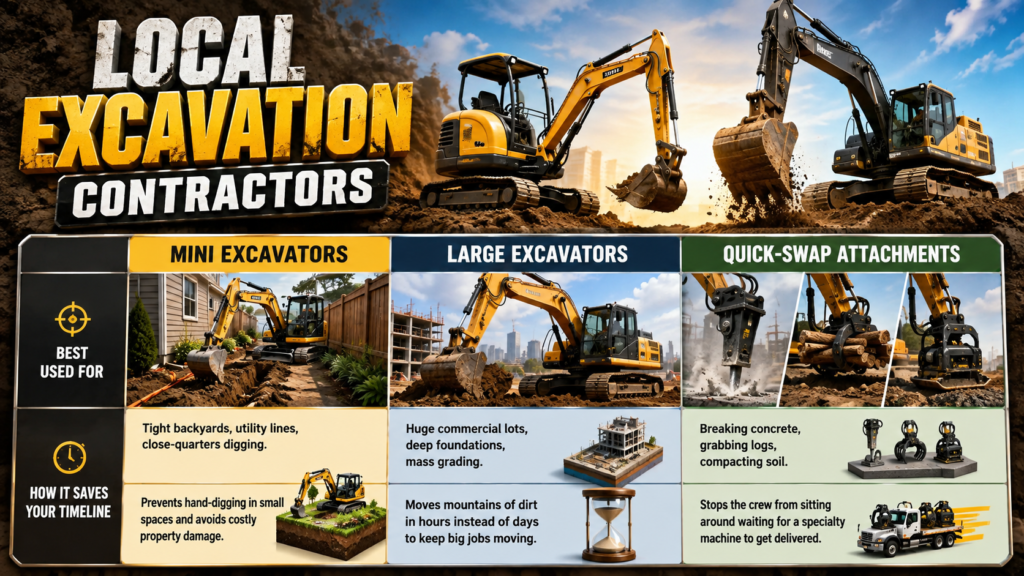
Table: Local excavation contractors
| Machine or Tool | Best Used For | How It Saves Your Timeline |
| Mini Excavators | Tight backyards, utility lines, close-quarters digging. | Prevents hand-digging in small spaces and avoids costly property damage. |
| Large Excavators | Huge commercial lots, deep foundations, mass grading. | Moves mountains of dirt in hours instead of days to keep big jobs moving. |
| Quick-Swap Attachments | Breaking concrete, grabbing logs, compacting soil. | Stops the crew from sitting around waiting for a specialty machine to get delivered. |
- Picking the perfect machine size: Sizing the equipment perfectly to your lot means the crew works at maximum speed without wrestling a machine that’s too big or too weak for the task.
- Swapping tools on the fly: Having attachments ready to go means one piece of machinery can do the job of three, cutting down on site congestion and rental delays.
- Fixing it before it breaks: Obsessive checks on high-wear parts keep the machines running strong, preventing those sudden mid-afternoon breakdowns that send everyone home early.
Cutting Through Red Tape and Supply Nightmares
Moving dirt is only half the battle. The other half is dealing with paperwork, city inspectors, and making sure the gravel trucks actually show up when they are supposed to. This is where hiring out-of-town companies usually backfires. Local excavation contractors are deeply plugged into the community’s bureaucratic and supply networks.
When you pull a permit, it’s rarely a smooth process. But local guys usually know the city planners and site inspectors by their first names. They know exactly what the county expects to see regarding erosion control and drainage before an inspector will sign off on the site preparation phase. If there’s a paperwork hiccup, a local contractor can physically drive down to the permit office and sort it out over the counter.
Try getting an out-of-state corporate rep to do that. Beyond city hall, the supply chain is a massive factor in keeping your construction timeline intact. When a local crew needs ten loads of crushed stone right now, they don’t have to start cold-calling quarries. They call their buddy down the road who runs the gravel pit, and the trucks are rolling in an hour.
The same goes for hauling away junk. They already have the hookups with nearby disposal sites and recycling centers. Plus, the communication is just better. If you have a sudden design change, you can call the owner directly on his cell phone, and he can walk the site with you that same afternoon.
- Talking to real decision-makers: You get to deal directly with the folks running the show, meaning problems are solved with a quick phone call rather than a chain of corporate emails.
- Breezing through city hall: Knowing the unwritten rules of the local permit office means your project doesn’t get stalled for weeks over a simple missing signature.
- Calling in local favors: Strong relationships with nearby quarries, dump sites, and rental yards mean materials show up fast, even when the rest of the industry is facing supply shortages.
Fighting the Weather and Underground Surprises
If there is one thing that will try to wreck your excavation project schedule, it’s Mother Nature. You can plan every single detail perfectly, and a three-day torrential downpour will turn your job site into a giant bowl of soup. But veteran local excavation contractors don’t just throw their hands up and quit when the weather turns.
They know the area’s climate patterns better than the weatherman. They know which neighborhoods flood easily and which soils drain fast. This means they can plan their work intelligently. If they know spring rains are coming, they might push hard to get the deep trenching done while it’s dry, saving the high-ground grading for the wetter weeks.
Believe it or not, these crews can even work through the dead of winter. By bringing in heavier, tracked excavation equipment and frost-ripping teeth, they can break through frozen ground and keep your project moving when amateur crews are sitting at home waiting for spring.
Then there are the underground surprises. You never truly know what you’re dealing with until you start scraping the topsoil. It’s incredibly common to hit old, unmapped utility lines, buried concrete from a demolished building, or massive boulders. An experienced local team doesn’t panic.
They immediately pivot. Because their home base is just down the road, they can quickly drag a hydraulic hammer to the site to break up the concrete, or they can call their local utility contacts to get an emergency line mark-out done in record time.
- Outsmarting the local forecast: Knowing how the neighborhood handles rain allows the crew to sequence the job so they are never stuck waiting for mud to dry.
- Working straight through winter: Having the experience and the heavy-duty gear to dig through frost means your start date doesn’t have to wait for warmer weather.
- Pivoting when things get weird: When the bucket hits an unmapped pipe or a giant rock, local crews have the nearby resources to fix the problem and keep digging without missing a beat.
7 Things Everyone Asks Before Breaking Ground (FAQs)
Are you guys actually licensed and insured to do this?
Absolutely, and you should never hire anyone who isn’t. Any legitimate local excavation contractors will carry state licenses, bonding, and heavy general liability insurance. If a machine accidentally clips a water main or damages your neighbor’s property, that insurance is what protects you from being sued. Always ask them to email over a copy of their insurance certificate before they start up an engine.
What is going to screw up our timeline?
The biggest timeline killers are usually bad weather, finding solid rock where we expected soft dirt, or realizing the site acreage requires more complex drainage than originally planned. We try to beat these delays by planning ahead, watching the sky, and making sure we bring the absolute right excavation equipment to handle the tough spots without stalling out.
What happens if you hit a pipe nobody knew about?
First off, we always call 811 before we ever touch the dirt to get the public utilities marked. But sometimes, private lines or old abandoned pipes are buried down there. If we hit something unexpected, we stop immediately, secure the area, and figure out what it is. We communicate with you right away, bring in the right attachments to work around it, and adjust the plan safely.
What kind of machines are you going to park in my yard?
It totally depends on the space we have to work with. If we are digging a foundation for a huge commercial building, we are bringing in the big track excavators and massive dump trucks. If we are working in your fenced-in backyard, we’ll bring in rubber-tracked mini excavators and compact skid steers so we don’t destroy your existing landscaping or crack your driveway.
Are you going to leave a giant pile of dirt when you finish?
No way. A real site preparation job includes hauling away the spoils. Unless you specifically ask us to leave topsoil on site for later landscaping, we load up the excess dirt, broken concrete, and tree stumps into dump trucks and haul them to our local disposal contacts. When we leave, the site is graded, clean, and ready for the next phase of construction.
Do you guys just stop working when it rains?
Not necessarily. While we can’t do precision finish grading in a torrential downpour, we can still do a lot of heavy lifting and trenching in less-than-perfect weather. We use equipment built for the mud and employ smart site drainage tricks to keep the water moving away from the work area. We work hard to push through the bad weather so your construction timeline doesn’t suffer.
Why do we need a written contract for this?
Because handshakes don’t hold up if things go wrong. A detailed written estimate protects both of us. It outlines exactly what we are going to do, what heavy machinery we are using, and exactly what it’s going to cost. It prevents any weird surprise bills at the end of the job and guarantees we are entirely accountable for hitting the deadlines we promised you.