
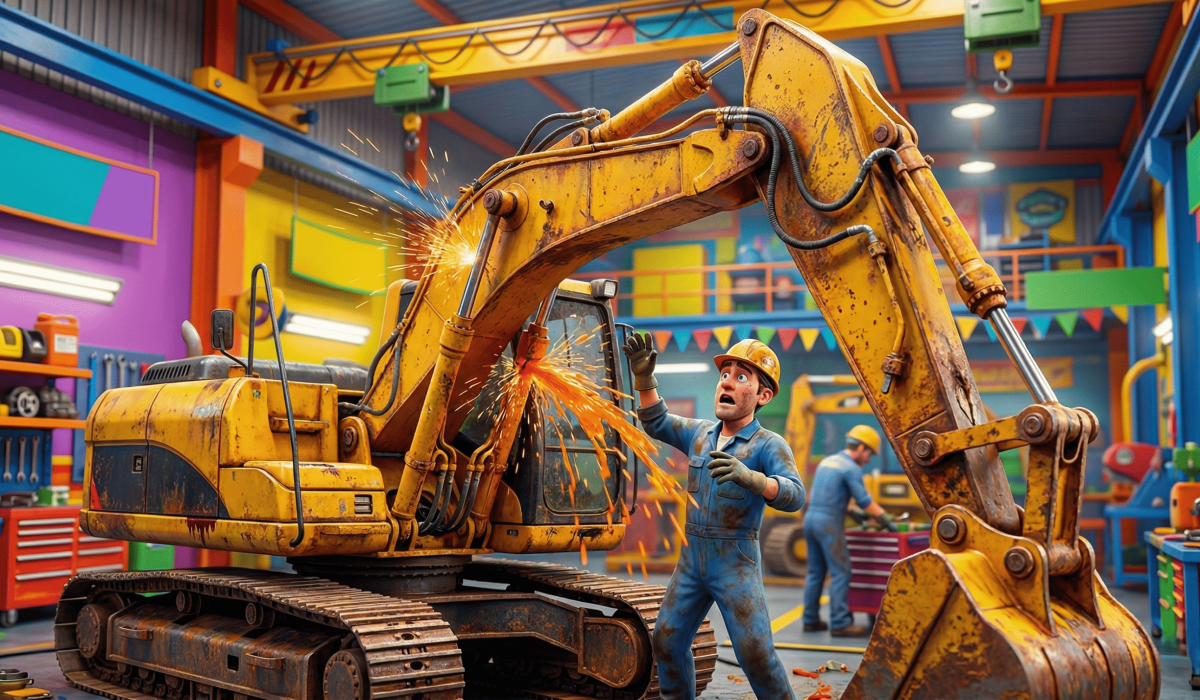
Precision or Danger: The Hidden Risks of Poor Excavator Maintenance
Working with heavy machinery is a high-risk job that requires both a lot of power and a lot of accuracy. When that balance changes because of poor service, the effects are rarely just “mechanical.” American Excavator knows that a single worn seal or loose track bolt is more than just something that needs to be fixed; it could cause a disaster on the job site. Bad excavator maintenance doesn’t just cause downtime; it also makes a “peril zone” where safety is at risk and project quality goes down.
This guide talks about why being precise with your excavator maintenance schedule is the only thing that can keep your build from being a huge failure.
The Fatal Flaw: How Hidden Wear Causes Problems on the Job
It is very rare for an excavator to break down without warning; it happens because the warnings were ignored. Sudden, uncontrolled movements can happen when there is hidden wear in the hydraulic system or structural parts.
If a primary lift cylinder breaks while a heavy load is hanging, the result is immediate and often deadly. Precision excavator maintenance is the science of finding these “invisible” threats before they turn into a small leak that becomes a deadly projectile or a collapsed boom.
- Contamination of hydraulic fluid: Tiny bits of dirt can get into control valves and cause “spool sticking,” which makes the arm move slowly or not at all.
- Structural Stress Cracks: Small cracks in the boom or stick welds can get bigger when they are under stress, which can cause a huge structural snap when digging at high pressure.
- Degraded Braking Systems: Worn swing brakes or travel motor seals can make the machine “drift,” which means it keeps moving even after the operator releases the controls
The Undercarriage: The Base of Safety and Stability
The undercarriage costs almost half of a lifetime maintenance costs, but it has an even bigger effect on safety. If the undercarriage isn’t kept in good shape, it can change the machine’s center of gravity and make it harder for it to stay stable on uneven ground.
If tracks are too loose, they could come off during a turn. If they are too tight, they use up power and make parts break too soon. We stress at americanexcavator.org that a machine that is stable is also safe.
- Track Tension Calibration: To keep the train from derailing, especially when working on slopes, make sure the tension is set to the manufacturer’s specifications.
- Managing debris: Mud and rocks that build up on rollers and idlers can cause them to stop working and make friction during travel unpredictable.
- Integrity of the Sprocket and Idler: Worn drive sprockets can skip teeth when there is a lot of torque, which can cause a sudden “jerk” that can throw an operator or make a load unstable.
Economic Danger: The Real Price of Reactive Excavator Maintenance
A lot of fleet managers think of excavator maintenance as a cost center, but “fixing it when it breaks” is the most expensive way to run a business. Reactive maintenance can cost three to five times as much as scheduled preventive care.
In addition to the repair bill, the “Peril of Subpar Maintenance” includes project delays, liquidated damages, and the huge rise in insurance premiums after an accident. Good excavator maintenance is a way to protect your profits by making sure your equipment stays an asset instead of a liability.
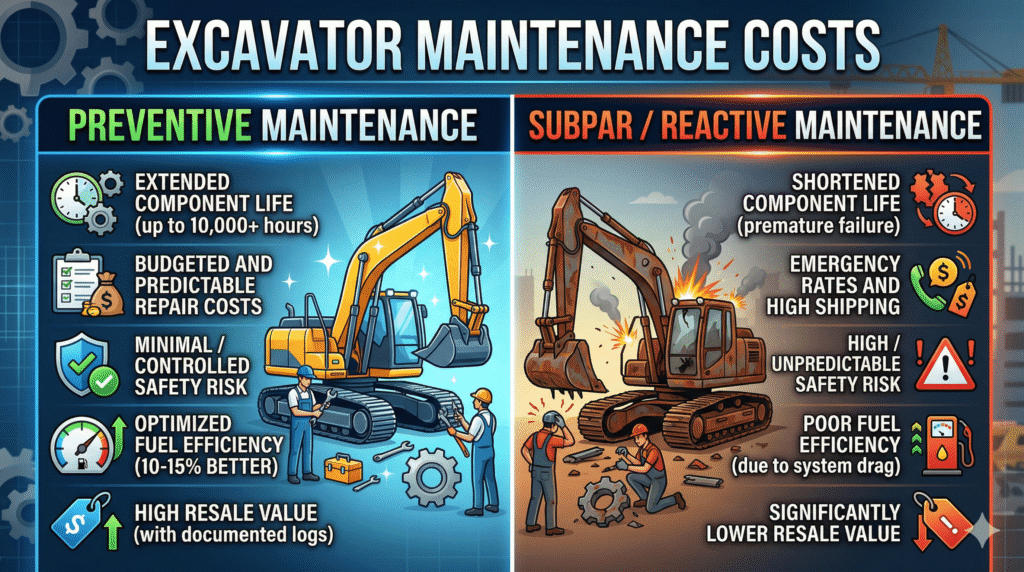
Table: Excavator Maintenance Costs
| Feature | Preventive Maintenance | Subpar/Reactive Maintenance |
| Component Life | Extended (up to 10,000+ hours) | Shortened (premature failure) |
| Repair Costs | Budgeted and predictable | Emergency rates and high shipping |
| Safety Risk | Minimal/Controlled | High/Unpredictable |
| Fuel Efficiency | Optimized (10-15% better) | Poor (due to system drag) |
| Resale Value | High (with documented logs) | Significantly lower |
The American Excavator Daily Checklist: Standards of Precision
The first 15 minutes of the workday are when safety and quality are built in. A “Precision” approach needs a standardized walkaround that goes beyond what is clear. We suggest that everyone who works at americanexcavator.org sees the pre-start inspection as a legal and moral duty to the rest of the crew. A machine can’t move even one yard of dirt if it’s not 100% ready.
- Fluid Analysis: Check the levels of the engine oil, hydraulic fluid, and coolant every day to keep the engine from overheating and damaging its parts.
- Check the hoses and seals: If you see “weeping” at the connections, that means there is a leak. A small wet spot today could turn into a big burst tomorrow.
- Testing the Safety System: Make sure that backup alarms, horns, and 360-degree cameras are all working to keep ground personnel safe.
The Future of Safety: 2026 Standards and Predictive Tech
The industry is changing from “Preventive” to “Predictive” excavator maintenance as we move through 2026. With modern telematics and AI-driven sensors, we can now keep an eye on heat signatures and vibration patterns in real time.
This level of technological accuracy takes the guesswork out of the equation, making sure that parts are replaced exactly when they need to be, not a second after they become dangerous. A modern, safety-conscious excavation company uses these tools.
- Telematics Integration: Use remote monitoring to keep an eye on fault codes and engine temperatures so that the operator doesn’t even notice a change.
- Thermal Imaging: Check hydraulic pumps and bearings from time to time for “hot spots” that show internal friction or a failure that is about to happen.
- Digital Logs: Keep clear, cloud-based service records so that no 250-hour or 500-hour window is ever missed.
FAQs: The Unseen Dangers of Subpar Excavator Maintenance
What are the most common reasons why excavators get into accidents?
Most accidents happen when someone gets hit, when a vehicle rolls over because the ground is unstable, or when a machine breaks down. Not taking care of the brakes and hydraulic systems properly often leads to the loss of control that causes these events.
How often do I need to grease my excavator?
Most machines need to have the boom, stick, and bucket greased every 8 to 10 hours of use. For high-impact jobs like breaking rocks, you may need to grease every four hours to keep the pins and bushings from galling.
What are the dangers of running with a small hydraulic leak?
A “small” leak means that the seal or hose is broken. When working under high pressure (often over 3,000 PSI), a weak spot can suddenly burst, dropping the load and possibly injuring workers nearby by injecting fluid.
How can I tell if the tension on my excavator track is right?
When the track is lifted off the ground, most manufacturers suggest a certain “sag” measurement, which is usually between 2 and 3 inches. Check your operator’s manual because too much or too little tension is one of the main reasons why the undercarriage wears out and becomes unstable.
Does bad maintenance affect how much fuel you use?
Yes. Dirty fuel injectors, clogged air filters, and parts that aren’t lubricated can make your car use up to 15% more fuel. Precision maintenance keeps the engine and hydraulics running at their best.
How can I tell if my swing bearing is broken?
Unusual popping or grinding noises when the cab is rotating, too much “play” or tilting of the cab, and metal flakes in the grease are all signs that something is wrong. If the swing bearing fails, the upper structure can come loose from the undercarriage.
Why is it so important to clean the undercarriage for safety?
If you don’t clean up debris, you might not see broken parts or stuck rollers. Additionally, dried mud adds thousands of pounds of “dead weight” to the machine, which can make the excavator less stable and less able to lift things.