
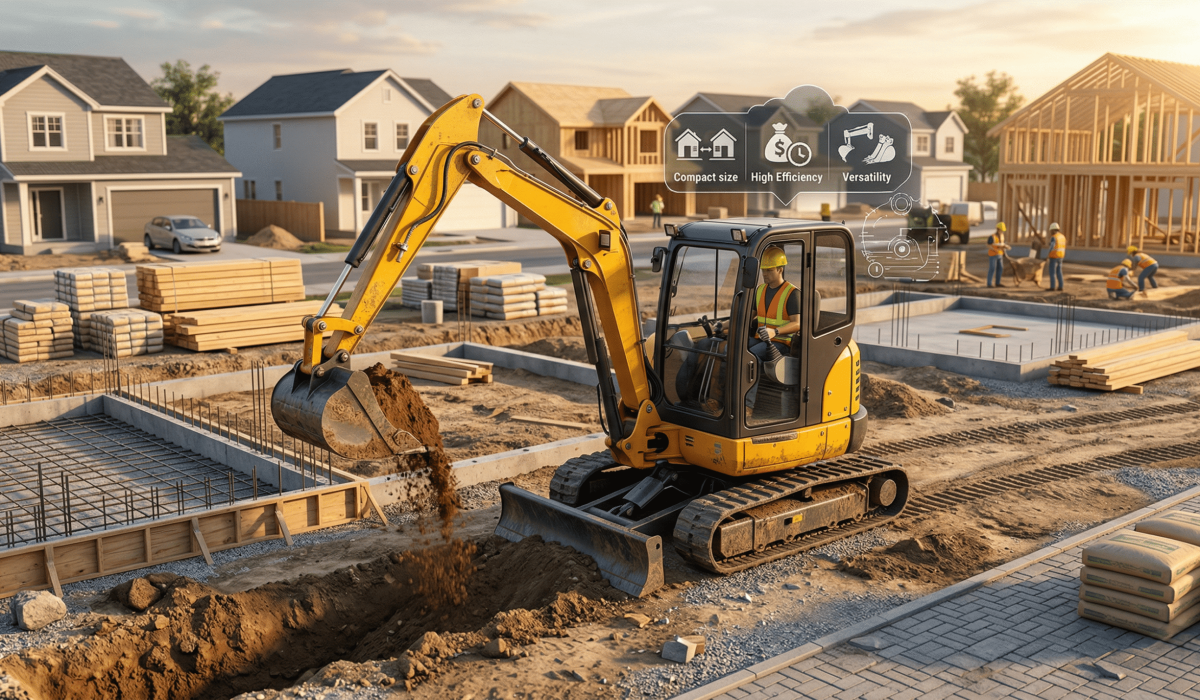
Why Mini Excavators Are Booming in Residential Construction
The way homes are built is changing. Big yellow iron used to rule every suburban lot, but those days are over. The actual hero of the work site today is a lot smaller, faster, and stronger than you may think. If you’ve been near any new house complexes, you’ve probably heard the constant buzz of mini excavator.
For a number of reasons, including high population density and the need to save money, these little machines have become the main tools for home building.
We at americanexcavator.org know that the rise in demand for these machines isn’t simply a fleeting fad; it’s a major shift in how houses are constructed. As property borders become smaller and labor prices go up, it’s hard to overlook how useful a little excavator is.
The small excavator is the “Swiss Army Knife” of the contemporary contractor. It can dig a foundation in a backyard with six inches of clearance or trench for fiber-optic cables without damaging a road.
The Strength of Smallness in Modern Homes
The changing nature of residential real estate is what has made micro excavators so popular. Newer home projects have smaller lots and buildings that are closer together. Big, old-fashioned excavators sometimes become “boxed in,” which means they can’t swing their cabs without striking a fence or a wall next door. This is where the small excavator really shines.
- No tail swing: Most current mini excavators have no or very little tail swing, which means that the housing of the machine may move around within the width of its tracks. This makes them perfect for working right next to other buildings.
- Access to Tight Spaces: These machines can fit via a regular backyard gate, which is just 3 to 5 feet wide, so you don’t have to take down any fence.
- Accuracy in Tight Spaces: Because of its smaller size, operators can do delicate operations like grading around a freshly built pool or excavating near fragile utility wires with a level of precision that bigger machines can’t match.
Because of these things, the mini excavator has gone from being a specialty rental item to a must-have for home constructors. You save a lot of time, money, and hassle when you can move a machine into a backyard without a crane or a demolition team.
Advanced attachments make it more versatile than ever
Most of the time, a tiny excavator is more than simply a digging equipment. It acts as a multi-purpose platform in homes. The boom and hydraulic system of a small excavator may hold a lot of various attachments. This means that one machine can do the job of a whole crew and a lot of different pieces of equipment.
- Hydraulic Breakers: These are great for breaking up old concrete patios, driveways, or rock layers that you may find when excavating a foundation.
- Augers and Post Hole Diggers: These tools make it easy to quickly put in deck piers, fence posts, and even big landscape trees with very little physical work.
- Thumbs and Grapples: These tools are very important for cleaning up a site because they let the operator pick up and carry heavy trash, logs, or stones as effortlessly as a person could.
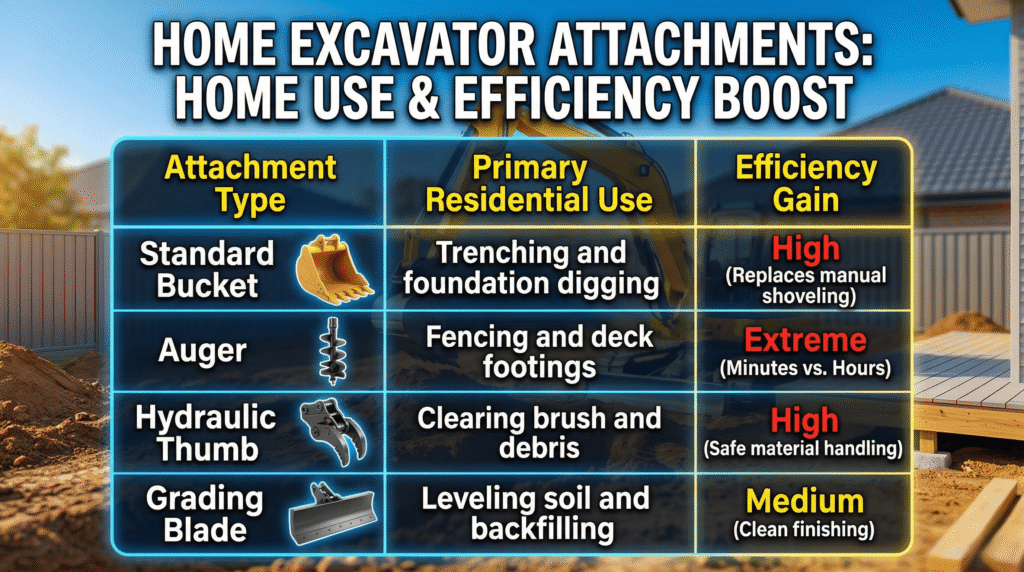
Type of attachment Primary use in homes Efficiency gain
| Attachment Type | Primary Residential Use | Efficiency Gain |
| Standard Bucket | Trenching and foundation digging | High (Replaces manual shoveling) |
| Auger | Fencing and deck footings | Extreme (Minutes vs. Hours) |
| Hydraulic Thumb | Clearing brush and debris | High (Safe material handling) |
| Grading Blade | Leveling soil and backfilling | Medium (Clean finishing) |
One big reason why the small excavator market is expected to develop a lot by 2026 is because they can do so many different things. Contractors don’t have to bring a backhoe, a skid steer, and a separate post-hole digger to a job site anymore. They can only bring one small excavator and a trailer full of equipment.
Less money spent on running costs and more economic efficiency – Small Excavator
With fuel costs and a lack of workers often on people’s minds, the tiny excavator makes a strong case for itself. For a small to medium-sized construction company, the Return on Investment (ROI) of a small equipment is frequently significantly quicker than that of a larger machine.
- Less gasoline Use: Smaller engines use a lot less gasoline. A micro excavator can often operate all day on a little amount of fuel, which is less than what a typical 20-ton machine needs.
- Easy to transfer: You don’t need a special semi-truck or “Oversize Load” licenses to transfer a tiny excavator. A conventional dual-axle trailer can haul most of them behind a heavy-duty pickup vehicle.
- Less Damage to the Site: They put a lot less strain on the ground since they are light. This means they are less likely to damage a customer’s driveway or leave large ruts in their grass, which lowers the cost of repairs that need to be done when the work is done.
The tiny excavator helps contractors quote more competitively on residential work by lowering the costs of transportation and gasoline. We commonly notice at americanexcavator.org that the savings in “collateral damage” alone—money saved by not ruining the current landscaping—over time covers for the machine’s rental or financing fees.
Safe and Easy to Use – Mini Excavators Are Booming in Residential Construction
Safety is the most important thing on any construction job, but residential locations have their own problems, such having homeowners, dogs, and kids around. The tiny excavator is the safest option for work in the neighborhood since it has a number of safety features.
- Better visibility: Modern units have a small design and wide glass cabins that provide the operator a vision of almost 360 degrees, which greatly lowers the danger of accidents.
- Easy-to-Use Controls: Most manufacturers have made the “joystick” controls the same, so even those who have only worked with heavy iron for a few years can use these machines.
- Less Noise Pollution: Newer mini excavator are designed to be lot quieter than older, bigger ones. This is very important for keeping good relationships with your neighbors and following local noise laws.
With a tiny excavator, it’s simpler to deal with the “human element” of construction. Newer operators find these machines easier to train on since they are less scary, and their motions are more predictable, which makes them safer to use near ground personnel.
FAQs – Mini Excavators Are Booming in Residential Construction
What do most people use a small excavator for while building a house?
The most typical applications include digging trenches for services like water, gas, and electricity, creating foundations for house extensions or detached garages, and doing professional landscaping like pool excavation or preparing a retaining wall.
Is it possible for a tiny excavator to excavate a whole basement?
A tiny excavator can dig a basement, but it’s usually better to utilize a bigger machine for the bulk excavation if there is enough room. But for small lots in cities where a big machine won’t fit, a 5-ton to 8-ton mini excavator is sometimes the only equipment that will work.
What is the maximum weight that a small excavator can lift?
The lifting capability of most common mini excavators is between 1,000 and 2,500 pounds, however this depends on the type and where the boom is. Most of the time, bigger compact machines in the 8-ton class can lift more than 5,000 pounds.
Do I need a specific license to use a small excavator on my land?
Most places don’t need a separate business license for private usage on your own land. But for professional contractors, OSHA rules and local certificates may apply. Before using any small excavator, it is usually best to have the right training.
Are mini excavator better than backhoes for home work?
Yes, most of the time. Mini excavators can turn all the way around and take up less space, which makes them much easier to move about in tiny backyards. A backhoe is quicker for driving on the road, but a tiny excavator is better for excavating since it is more accurate.
How long does a tiny excavator usually last?
If you take care of it, a good mini excavator may endure between 8,000 and 10,000 hours. Because they are generally utilized for lighter-duty activities than big machines, their parts tend to wear out less quickly.
What is the price of renting a small excavator?
The daily rental price usually ranges from $250 to $600, depending on the size of the equipment and the accessories needed. Monthly charges are much less for long-term home renovations.
In conclusion Mini Excavator, The future is Little
The fact that the mini excavator is the most popular tool for constructing homes shows that people are building smarter and more accurately. These tools let contractors do more with less by putting agility, fuel economy, and adaptability first.
As we travel farther into 2026, the tendency for “compact power” will only become stronger. This makes the small excavator an essential symbol of the American work site.
We at americanexcavator.org are dedicated to giving you the information and tools you need to remain ahead in this changing field. The appropriate tool doesn’t simply get the task done; it alters how you do it.