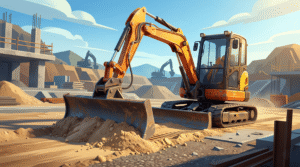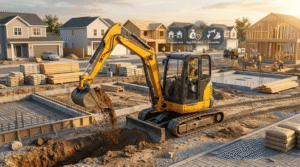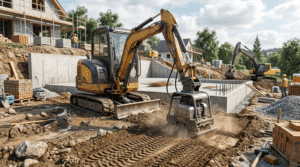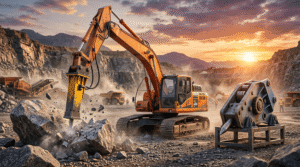
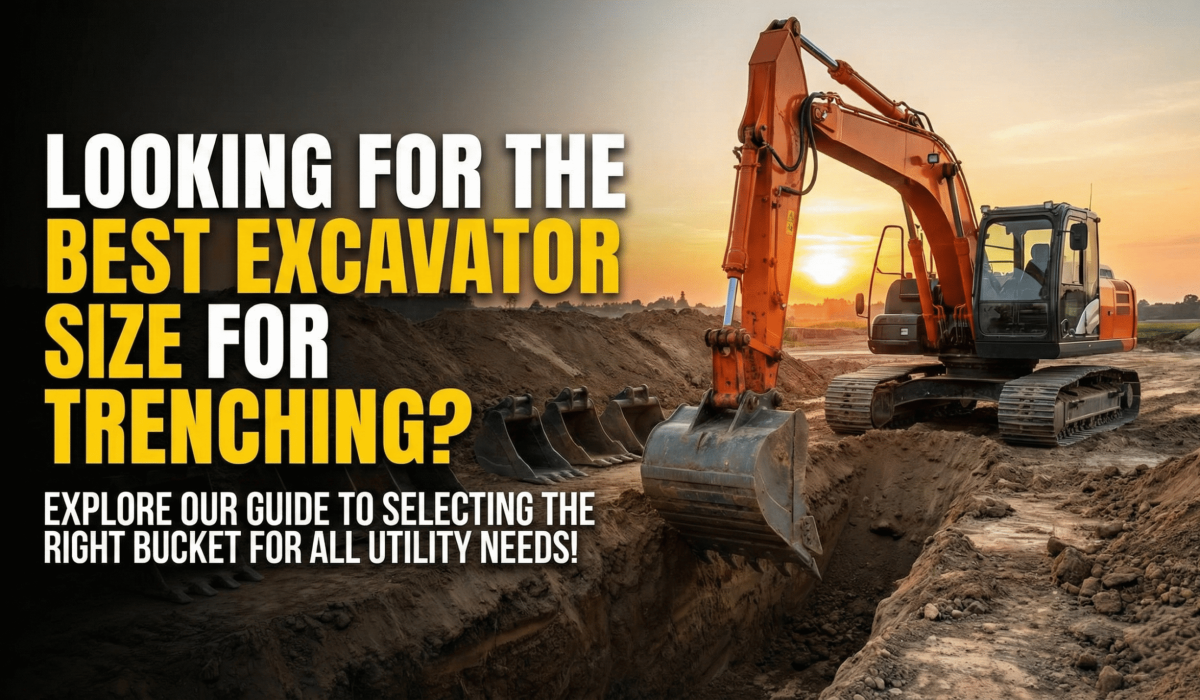
Looking for the best excavator size for trenching?
Explore our guide to selecting the right bucket for all utility needs!
Picking the proper equipment for a construction site can be a deciding factor in whether your work becomes successful and profitable or a logistical nightmare. In fact, when it comes to setting the right foundations for the development of modern infrastructure, the question of which excavator size would be best for trenching and utilities with the right bucket choice becomes pivotal in determining how quickly and smoothly the operation will be running.
Without a doubt, if you are putting fiber optic cables in a tightly packed urban alley or laying large sewage pipes for a new housing estate, the capacity and reach of the machine will largely determine your speed, safety, and ultimately the amount of money you make.
Understanding the Excavator Size Spectrum for Utility Work
Excavators classes are defined by their weight, which in turn has an impact on features such as how deep the machine can dig, how heavy a load it can lift, and how far the arm can swing without a collision. Typically, for trenching and utility projects two types of excavators are prevalently used:
Mini-excavators (operating weight of 1 to 10 tons) and Standard excavators (operating weight of 10 to 25 tons).
The “best” size is rarely the largest one available; rather, it is the one that balances the power required to break through the soil with the agility needed to navigate existing underground lines.
- Mini Excavators (1–6 Tons): These machines rule the residential utility sector and are perfectly suitable for smaller projects such as gas line, fiber optic, and irrigation installations.
- Small/Compact Excavators (6–10 Tons): Players in this category are sometimes called the “sweet spot” machines since they have enough power for sewer lines deep in the ground while still being easy to transport on standard-sized trailers.
- Standard Excavators (10–25 Tons): These machines are generally considered necessary for large-scale city infrastructure projects where the heavy lifting of concrete pipes or trench boxes is to be done.
The Role of Mini Excavators in Precision Trenching
Most local utility contractors consider a mini excavator as their primary equipment of choice. Due to their small size, these machines can easily work in spaces that are remote or difficult to access—for example, in between two residential buildings, under low-hanging power lines, or on very narrow sidewalks.
Furthermore, since a typical utility job requires excavating around existing “live” lines such as water, gas, and electricity, a 3-ton to 5-ton machine offers exceptional precision which can hardly be matched by larger models.
Usually, these machines come with a feature called zero-tail swing, wherein the main unit does not extend beyond the width of the tracks when the upper structure is turned, thus preventing damage to nearby buildings or other structures during operation.
In addition to precision and safety, mini excavators can minimize damage to the surface since they come standard with rubber tracks. Thanks to that, you can rest assured that your driveway or a part of the lawn you took great care of will not be ruined during the work.
Mini excavators are also versatile in that they can be equipped for narrow trenching (6-12 inches) as well as for hydraulic thumbs that can be used for pipe or conduit installation.
Standard Excavators for Heavy-Duty Utility Infrastructure
Whilst few, mini machines on their own cannot satisfy the entire spectrum of utility delivery requirements. Larger standard-sized excavators (operating weight between 15 and 25 tons) actually perform the majority of the work especially when it comes to deeper excavations (more than 10 ft) or large diameter storm drains where mini excavators just don’t have enough power and reach.
Besides that, standard excavators are sturdy enough to facilitate the use of trench boxes—which are heavy steel cages that workers stand in for protection from cave-in in order to fulfill the safety requirements for deep excavations.
- Lift capacity: A 20-ton excavator like the Caterpillar 320 would be ideal for the job of heavy lifting, e.g., lifting large concrete manholes or members of the pipe section.
- Digging depth and reach: The advantage of standard excavators is that they reach a digging depth of 18 to 22 feet, which is crucial for installation of deep gravity-fed sewer systems.
- Bulk earthmoving efficiency: When excavating a trench that extends for several miles, the use of a bigger bucket on a standard-sized machine will greatly help in lessening the time spent per linear foot.
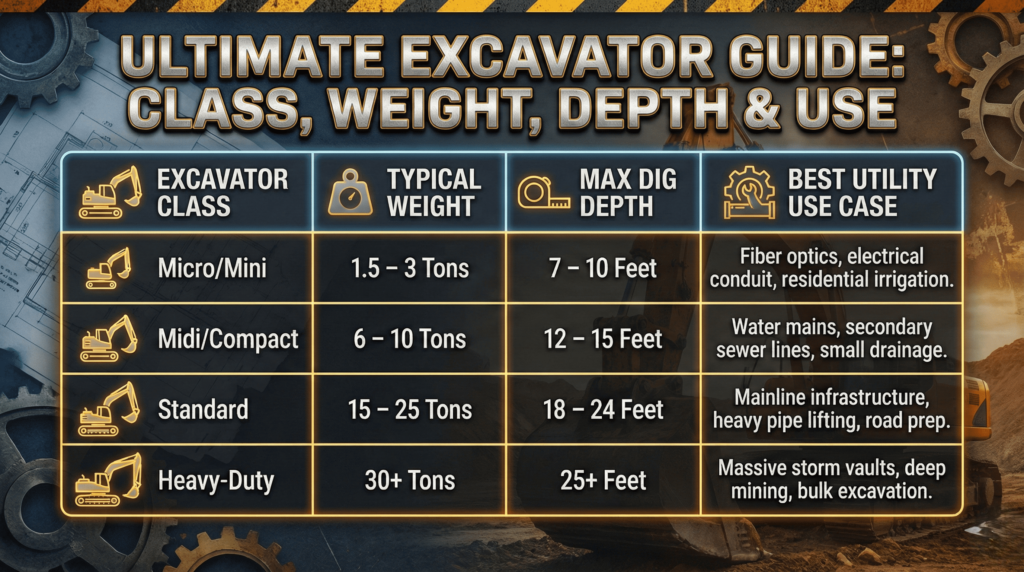
Excavator Size Comparison Table for Utility Applications
To assist you with your choice, below is a selection of the most popular sizes used in the main part of the industry today.
Table:
| Excavator Class | Typical Weight | Max Dig Depth | Best Utility Use Case |
| Micro/Mini | 1.5 – 3 Tons | 7 – 10 Feet | Fiber optics, electrical conduit, residential irrigation. |
| Midi/Compact | 6 – 10 Tons | 12 – 15 Feet | Water mains, secondary sewer lines, small drainage. |
| Standard | 15 – 25 Tons | 18 – 24 Feet | Mainline infrastructure, heavy pipe lifting, road prep. |
| Heavy-Duty | 30+ Tons | 25+ Feet | Massive storm vaults, deep mining, bulk excavation. |
Critical Factors When Choosing Your Machine
Aside from just the tonnage, there are many other variables and yet to be determined site-specific factors that need to be taken into account even before signing a rental contract or buying a machine. The reason is that every site presents a different set of challenges and, if not identified early, even the best machine can turn into a costly hurdle.
- Access and width at the site: the first thing to do is to locate and measure the narrowest entry point. In fact, no matter how powerful a 10-ton machine is, it would still be useless if it couldn’t get through the gate that leads to the utility easement.
- Lifting the load: Are you just moving the earth or do you also have to carry 4,000-lb concrete pipes? Always refer to the lift chart of the manufacturer to see the exact figures because lifting capacity is dramatically reduced the moment the arm is fully extended.
- The solution for transportation: Any machine that is heavier than 10 tons will most likely require special trailers and “Oversize” permits, which in turn could seriously hike your project budget with costs that are unaccounted for at first.
Significance of Accurate Bucket Selection
Excavator size is just half of what determines performance; the other half is all about the bucket since it is the part that actually gets down to work. It is often better to use thinner trenching buckets.
If the bucket’s width exceeds the diameter of a pipe, then logically, that means you are moving and eventually backfilling more earth than what’s necessary which is a waste of both fuel and time you could have saved.
- Trenching buckets: Typically, these are quite narrow – ranging from 12 to 18 inches often, and their design incorporates an elongated floor so as to produce a level and clean bottom that would be perfect for pipe bedding.
- V-Buckets: Designed to be used in one single pass for creating sloped trenches, these are a great fit for drainage ditches and serve as a preventive measure from side-wall collapse in loose soil situations.
- Skeleton Buckets: These make sense for utility backfilling where, to protect newly installed pipes from damage, it becomes necessary to remove large stones by sifting.
FAQs: What Excavator Size Is Best for Trenching and Utilities?
What size excavator do I need to dig a 4-foot deep trench?
Usually, the best choice for digging a trench of 4-foot depth would be a 1.5-ton to 3-ton mini excavator. Not only are these machines very fuel-efficient but they also have an average depth possibility of around 8 feet which gives you more than enough leeway for the 4-foot trench to be dug without having the machine become unnecessarily big in terms of footprint.
Can a mini excavator lift heavy concrete utility pipes?
It really depends on the weight of the pipes. A 3-ton mini excavator is typically only able to safely lift between 1,000 and 1,500 lbs at close quarters. Considering that a standard 8-foot concrete sewer pipe weighs more than 2,000 lbs., it’d be safer to use a 6-ton to 10-ton midi excavator for such a task.
What is the most versatile excavator size for a utility contractor?
Many people would argue that the 8-ton (Midi) excavator is actually the most versatile one out of all. It has the advantage of being small enough in order to be transported without requiring the driver to have a commercial driver’s license (CDL) in certain areas (which depends on the trailer), yet at the same time, it is powerful enough to be able to deal with both deep trenching as well as lifting most residential utility components.
How wide should an excavator bucket be for utility trenching?
A simple rule of thumb would be to have a bucket width that is equal to the pipe diameter plus 6 to 12 inches. So, what this means is, for instance, that in the case of a typical 4-inch pipe, ideally, one could use a 12-inch bucket. The reason why you should avoid using overly wide buckets when you feel is bound to increase your backfill expenses and essentially slow down the entire project, too.
Do I need a zero-tail swing excavator for utility work?
If working in urban environments or close to existing residential properties is your case, then yes, having a zero-tail swing machine is very much advisable. This feature enables the machine to be rotated a full 360-degree without the counterweight colliding with adjacent fences, walls, or passing vehicles, thereby significantly increasing operator safety and productivity.
What excavator size is best for commercial mainline water projects?
A commercial mainline usually calls for a 15-ton to 22-ton standard excavator. This type of large-scale project typically involves digging very deep (well beyond 10 feet), and heavy trench shields are used which the greater sized excavators only can handle safely and effectively.
Is a wheeled excavator better than a tracked one for utility work?
If you are doing utility work on a finished asphalt surface and need to frequently relocate your machine along the road, then wheeled excavators would be better for you. However, in most situations of “normal outdoor” or greenfield trenching, tracked excavators are far superior in terms of stability and also provide the much-needed traction in muddy conditions.
Conclusion: Final Decision For the Right Excavator Size for Trenching
Picking an excavator of the right excavator size for trenching and utilities is really just a matter of compromising a little between depth, weight, and available space. When it comes to handling residential repairs and laying down the fiber, nothing beats the nimbleness of a mini excavator. Whereas in the case of municipal infrastructure and deep-soil projects, the brute power of a standard excavator is a must-have.
Here at American Excavator, we get that with a single mistake, your entire project can go up in smoke. So, before you decide on an option, always check with your equipment specialist to discuss dig depths and lift capacities of the different models to be used in the project.